In this article you will learn how to use Ultra Video properly: timed beats, a still camera, and prompts that keep the bodies stable.
MyStepFrogAdmin
Nov 21, 2026.7 min read
What works is not a pile of tags. Motion needs weight — pressure, contact, soft-body deformation — and the prompt needs to read like a short performance, not a keyword list.
Remember one formula:
Who is where + how the bodies meet + camera and light + a positive constraint stack at the end.
The general version is subject + scene + motion. If you already have a first frame or reference images, the person and the style are mostly locked. Use the prompt mainly for motion and camera.
1. The rules that matter most
Write prose, not tags
The mode reads sentences, not a tag pile. Same idea, two ways of writing it.
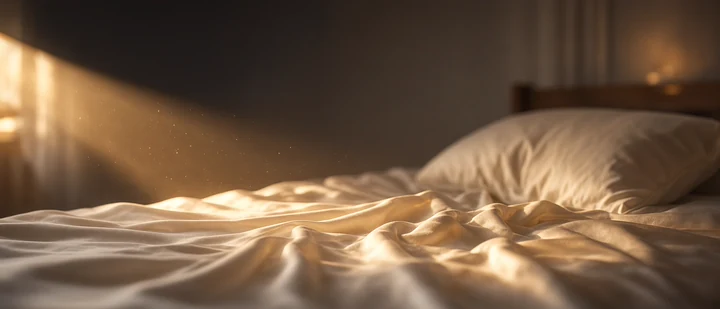
Bathed in the warm afternoon sun, [Character Name] lies on soft silk sheets, her eyes filled with focus and longing. The two move in a slow, rhythmic dance of intimacy, where every point of skin contact generates realistic compression and deformation, with shadows shifting gently in sync with their movement.
Do not stop at what the person is “doing.” Name the physical touch:
showing deep insertion, vaginal grip, natural skin-on-skin friction, soft-body deformation on impact.
Vague lines such as “they become intimate” or “passion unfolds” are often answered with a blocked view, a wider shot, a fade, or a cutaway. Name whose hand, which body part, which posture, and what rhythm. Give the size of the movement when you can: about 3 cm of travel, about 10 degrees of turn. “Slowly” is usually too empty.
Tip
One named contact beats a pile of mood words. Say whose hand, which body part, and how far it moves.
One event every 3–4 seconds
At 00:00 sets the frame. At 00:03 is one change. At 00:06 is the next. Packed tighter than that, the action cannot finish and starts to twitch. Sparser than that, the second half stalls or improvises.
Do not open at peak intensity. Climb, then leave a moment to settle. Do not cut off at the peak.
End with what you want
There is no negative prompt. A line like no distortion, no extra limbs can raise the chance of exactly those problems, because the unwanted words are still in the prompt. Put the target state at the very end:
Camera static. Anatomy correct, five fingers on each hand. Face stable, features unchanged. Smooth continuous motion. Consistent lighting. Sharp focus.
Add a state line only when you need it:
- Persistent nude state throughout. Same state of undress in every shot. Consistent anatomical geometry. Photorealistic skin texture only.
- Photorealistic style only. Photographic skin and lighting only.
- Strictly two adult characters, two bodies total.
- Same nude state across every cut. Wardrobe unchanged from the established state.
Watch out
Naming the mistake you want to avoid often produces that mistake. Write the state you want instead.
A picture can do one of two jobs
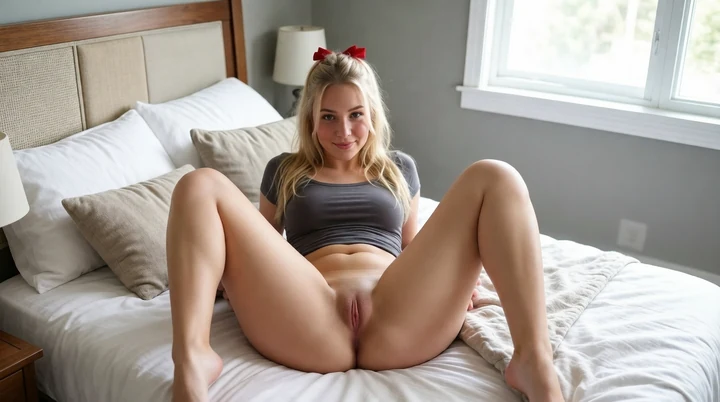
First frame means “start on this picture.” You give one image, and that image is the opening frame. The person, the room, the crop, and the starting pose are that photo. The prompt only describes what moves from there. Use it when one person stays inside that shot and the action fits the framing you already have. It is like pressing play on a photo.
Reference images mean “use these for the look, then build the shot.” You give one or more images for her appearance, his appearance, or the room. Ultra Video may place them, change the angle, and compose a new frame. Those images are not locked as the opening picture. Use them when one photo cannot contain the action: two people, someone entering the frame, a large change of position, a camera angle that is not already in the photo, or pieces combined from different images.
A first frame is one frozen photo. If the second person is not in it, or the move leaves that framing, the clip has to invent bodies and space inside a locked picture, and limbs and positions break. References avoid that. The look still comes from your images, but the shot is built for the action.
Choose with one question: does the whole action already fit inside one photo, with the same person staying in that framing?
- Yes: first frame. Write the opening line so it matches that photo.
- No: reference images. Say who is where, because nothing is locked as frame 1 yet.
Refer to a picture in plain language: “The woman in Image 1 is the main character; keep her face, hairstyle, hair color, outfit, and body proportions consistent throughout.”
Do not write [Image 1]. Square brackets are for tone tags such as [softly] and [breathlessly].
For complex body motion, keep the camera still
Default to a static camera. Orbits, combined push-and-rotate moves, and whip pans are a common cause of wrong limb counts and fused hands.
Hands fail first: say what the left hand is doing and what the right hand is doing. Do not write “hands roam.”
For two people, say who is on the left, who is on the right, and which way they face. In each beat, only one person initiates; the other reacts.
2. An 8-second skeleton
Eight seconds fits one small change and one main change. Use three beats, and leave each beat 3–4 seconds so the motion can finish.
Stay around 500–800 characters. A longer prompt does not make a clearer clip.
Watch out
Do not pack five beats into 8 seconds. The motion starts to twitch.
Copy this shape
8-second skeleton
The person in Image 1 is the main character; keep face, hairstyle, hair color, outfit, and body proportions consistent throughout.
At 00:00, medium close-up, static camera, the person is at ____, wearing ____, the setting is ____, the light is ____; background remains as in the first frame; sharp, photorealistic. Ambient: quiet room, soft breathing, room tone only.
At 00:03, [softly] ____ (one small action, about __ cm), expression ____; left hand ____, right hand ____.
At 00:06, [breathlessly] ____ (the main change, about __ cm), current state is ____.
Camera static. Anatomy correct, five fingers on each hand. Face stable and consistent. Smooth continuous motion. Consistent lighting. Sharp focus.
Set the duration to 8. The last mark is 00:06, and that beat runs to the end. Do not cut it off at the peak.
If you need 10 seconds
Ten seconds is as long as this shape should run. Do not add a fourth beat. Move the last beat later instead.
At 00:00 sets the frame. At 00:03 is the small change. At 00:07 is the main change, and it carries through 00:10. Set the duration to 10. Stay around 600–900 characters.
3. When something goes wrong
Some fixes are lines you write. Some are setup changes. Do not paste the setup changes into the prompt.
Write these into the prompt
Put the state lines at the end, with the other constraints. The shot-continuity line goes in the later shot, not in the ending stack.
Clothing returns after a cut
Same nude state across every cut. Wardrobe unchanged from the established state.
Action breaks after a cut
Shot 2 continues the physical rhythm established in shot 1.
Extra limbs or a third person
Strictly two adult characters, two bodies total.
The look turns cartoonish
Photorealistic style only. Photographic skin and lighting only.
The important area is hidden, or the camera pulls back or fades
Name the action. The subject stays fully in frame.
The face drifts
Face stable and consistent. Facial features do not change.
Unwanted music
Ambient: quiet room, soft breathing, room tone only.
The background changes
Background remains as in the first frame.
Tip
You cannot tell whether a prompt change helped. Lock the seed. Change only the prompt.
4. Read it once before you generate
- If the action already fits in one photo, that photo is the opening frame. If it does not, use reference images and say who is where.
- Write sentences with times, such as At 00:00 and At 00:03. Do not write a list of tags.
- For 8 or 10 seconds, write three changes only. Say where the left hand is, and where the right hand is.
- The camera stays still.
- The last lines describe what you want to see. They do not name the mistakes you are trying to avoid.